
How to Navigate Perth Airport Drop Off Zones (2026)
Learn how to navigate Perth Airport drop off zones with our 2026 guide. Find express bays, terminal tips and parking maps. Book your seamless transfer now.

Table of Contents
- Perth Airport Drop Off Zones: The Basics You Need to Know
- Perth Airport Parking Map: Finding Your Way Around the Precinct
- Express Pick-Up and Drop-Off Zones: How They Work
- Terminal 1 Drop Off Instructions: A Step-by-Step Guide
- Terminal 3 and 4 Drop Off: What Changes for Domestic Travelers
- Rideshare, Taxi and Public Transport Access at Perth Airport
- Real-Time Traffic Hacks and Vehicle-Specific Tips
- Frequently Asked Questions
Last Updated: September 12, 2026
Perth Airport Drop Off Zones: The Basics You Need to Know
Perth Airport drop off zones are the designated kerbside areas where vehicles may stop briefly to let passengers out, and they operate under strict time limits, no-parking rules and one-way traffic flow. Understanding these zones before you drive in saves you from circling, fines and missed flights. This guide from DriveToArrive breaks down every terminal, the parking map, rideshare bays and the traffic hacks that actually work.
The airport precinct is split across two terminal areas, with separate road systems feeding each. That split is the single biggest source of confusion for first-time drivers.
Most people assume there's one central drop-off point. There isn't.
Each terminal area has its own entry roads, its own short-stay parking and its own passenger loading rules. Turn into the wrong one and you'll be doing a loop of the precinct before you find your way back.
The official Perth Airport terminal and precinct information confirms the layout, and it's worth a look before your first trip.
Perth Airport Parking Map: Finding Your Way Around the Precinct
The precinct map divides into two zones: the Terminal 1 area to the east and the Terminal 3 and 4 area to the north-west, each with its own short-stay parking, drop-off lanes and public transport hub. Getting the zone right matters more than any other single decision you'll make behind the wheel.
Here's how the two areas break down:
| Precinct | Serves | Drop-Off Access | Short-Stay Parking |
|---|---|---|---|
| Terminal 1 area | International and some domestic | Dedicated kerbside lane, immediate pick-up | Multi-storey short-stay, walkable to arrivals |
| Terminal 3/4 area | Domestic | Separate kerbside lane, immediate pick-up | Short-stay car park adjacent to terminal |
Signage is colour-coded and repeated at every turn, so follow the terminal number rather than a general "airport" sign. Wayfinding on the approach roads is clear once you're in the right lane, but the exits come up fast.
Drop-Off vs Short-Stay Parking: A Decision Matrix
The most common question drivers ask is whether to use the free kerbside drop-off or pay for short-stay parking. The answer depends on whether your passenger is ready to exit the vehicle the moment you stop.
| Situation | Best option | Why |
|---|---|---|
| Passenger is at the kerb, bags in hand, ready to walk in | Kerbside drop-off zone | Free within the short window, no entry/exit barrier delay |
| Passenger still inside the terminal, collecting bags or checking in | Short-stay car park | You can park legally and wait without triggering enforcement |
| Passenger has oversized luggage or needs mobility assistance | Short-stay car park near the terminal entry | More time to unload and arrange assistance without blocking the lane |
| You are early and the flight is delayed | Short-stay car park | Kerbside waiting is prohibited; parking removes the risk of a fine |
| You are dropping and immediately leaving | Kerbside drop-off zone | Fastest option when the passenger is prepared |
A simple rule of thumb: if you would need to stop for more than the posted drop-off window, park. The cost of an hour in short-stay parking is almost always less than the penalty for overstaying in a drop-off or no-parking zone (perthairport.com.au).
Short-Stay Parking and Drop Off Cost Comparison
Drop-off at the kerbside is free for a short window, while short-stay parking is charged by the hour and suits longer waits. The trade-off is simple: if your passenger is ready and waiting, use the drop-off zone. If they're still inside, park.
For corporate travel managers, the calculation changes. A chauffeur service with a fixed price and a built-in free wait removes the guesswork entirely, which is why many firms book airport transfers with fixed pricing rather than leaving executives to manage kerbside timing.
Entry Points and Wayfinding by Precinct
Terminal 1 area: Approach from the main access road and follow the Terminal 1 signs. The drop-off lane splits from the through lanes; stay left for the kerbside. The short-stay multi-storey is signed separately and has its own entry ramp. If you miss the turn, the one-way loop returns you to the main road rather than letting you reverse.
Terminal 3/4 area: This precinct is reached via a different set of approach roads. Follow Terminal 3 or 4 signage from the start; a general "airport" sign may route you toward the Terminal 1 precinct instead. The short-stay car park sits adjacent to the terminal, which makes it practical to park first and walk your passenger in.
A common pattern among regular drivers is to memorise the terminal number, not the airline. Airlines can shift between terminals over time, but the precinct signage is built around terminal numbers and is repeated at every decision point.
Express Pick-Up and Drop-Off Zones: How They Work
Express pick-up and drop-off zones are short-window kerbside areas designed for rapid passenger loading, with signage stating the maximum stop time and a strict no-waiting rule once your passenger has exited. They exist to keep traffic flowing, not to give you a place to pause.
How to use them correctly:
- Pull in only when your passenger is ready to exit
- Stop parallel to the kerb, not in the through lane
- Unload luggage from the kerb side, never the traffic side
- Say your goodbyes before you arrive, not at the kerb
- Pull out as soon as the doors are closed
The express zones connect directly to the terminal forecourt, so walking distances are short. Mobility assistance is available if you arrange it in advance, and the airport accessibility guidance sets out what to request.
Terminal 1 Drop Off Instructions: A Step-by-Step Guide
Terminal 1 drop off instructions follow a simple sequence: follow the Terminal 1 signs from the main approach, stay in the left lane for the drop-off ramp, pull into the kerbside bay, unload, and exit via the marked one-way loop. The whole process takes under two minutes if you're prepared.
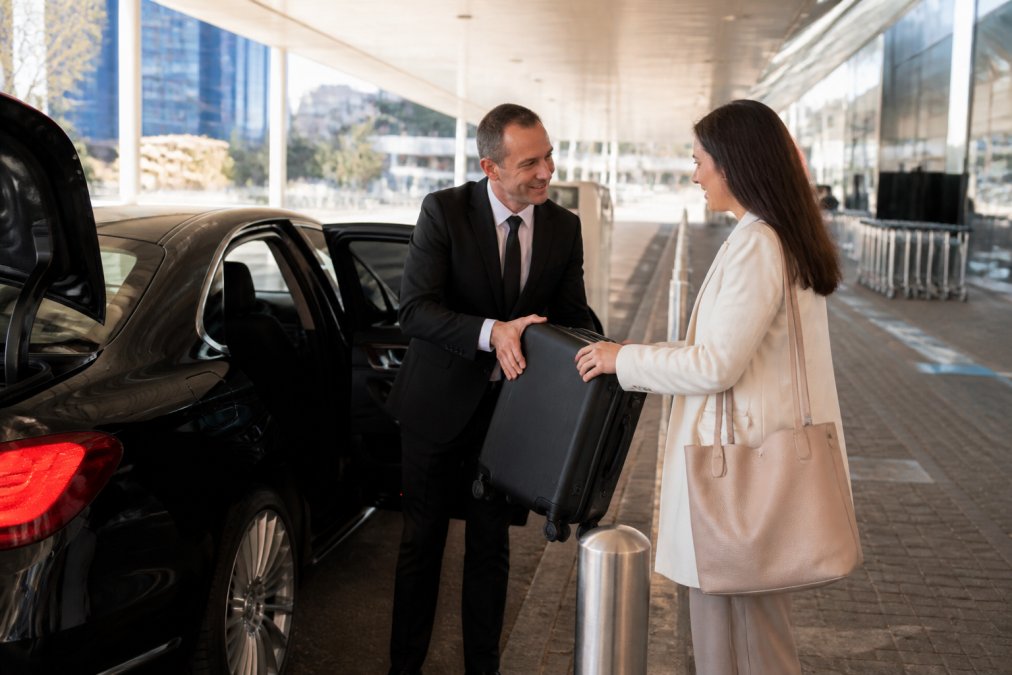
Step by step:
- Approach on the main access road and follow signage for Terminal 1, not the general airport route.
- Move into the drop-off lane as the road splits; the through lanes bypass the terminal.
- Pull into the next available bay rather than stopping in the first gap you see.
- Unload from the kerb side and keep bags clear of the traffic lane.
- Exit via the one-way loop back to the main road; there's no reversing.
If you're arriving during a peak period, the loop can back up. Build in extra transit time.
Terminal 3 and 4 Drop Off: What Changes for Domestic Travelers
Terminal 3 and 4 drop off sits in a separate precinct with its own access roads, so the route you use for Terminal 1 won't get you there. Domestic travellers usually arrive with less luggage and tighter schedules, which makes the express zone the better choice when they're ready to walk straight in.
The differences that matter:
- Separate approach roads. Follow Terminal 3 or 4 signage from the start.
- Adjacent short-stay parking. Handy if your passenger needs to check in first.
- Shared kerbside with rideshare. Expect more vehicles competing for bays at peak times.
- Shorter walk to check-in. The drop-off lane feeds directly into the departure level.
For domestic roadshows where several executives are moving through the same terminal on the same morning, an executive chauffeur service with named drivers and flight tracking keeps the sequence predictable instead of relying on kerbside timing.
Rideshare, Taxi and Public Transport Access at Perth Airport
Rideshare and taxi collection points sit in dedicated bays away from the general drop-off kerb, while public transport access runs through the precinct's bus stops and shuttle connections. Mixing these up is the second most common mistake drivers make.
The rules are straightforward:
- Rideshare bays: marked pick-up points, not the general kerbside. Your driver will direct you.
- Taxi ranks: separate from rideshare, usually closer to the arrivals hall exit.
- Public transport hub: bus routes connect the terminals to the wider network.
- Shuttle service: moves passengers between precincts where walking isn't practical.
Where the Bays Actually Are
Terminal 1 precinct: Rideshare pick-up is in a dedicated area within the short-stay car park, not at the terminal kerb. Passengers exit arrivals, follow the rideshare signs, and walk to the marked bay. Taxis rank closer to the arrivals exit. The public transport hub serves bus routes connecting to the wider network, and the inter-terminal shuttle connects to the Terminal 3/4 precinct.
Terminal 3/4 precinct: Rideshare and taxi collection points are similarly separated from the general drop-off kerb. Because the two precincts are physically separate, a passenger who lands at Terminal 1 cannot walk to the Terminal 3/4 rideshare bay, they need the shuttle or a vehicle that can move between precincts.
Access Rules Drivers Need to Know
- Rideshare drivers typically wait in a designated holding area until a ride is matched, then move to the pick-up bay. This is why your app may show the driver as "arrived" while they are still in the holding area.
- Taxi drivers queue at the rank and are dispatched in order. You cannot request a specific taxi from the rank.
- Private vehicles cannot use rideshare or taxi bays. If you are collecting a friend, use the general drop-off kerb or short-stay parking.
- Buses and shuttles have their own stops and are not affected by kerbside drop-off congestion.
Public Transport and Shuttle Connections
Bus routes serve the precinct's public transport hub, connecting passengers to the wider network. The inter-terminal shuttle moves passengers between the Terminal 1 and Terminal 3/4 precincts where walking is not practical. For passengers arriving late at night, the shuttle schedule is worth checking in advance, as frequency can drop outside peak hours.
For passengers arriving late at night, a pre-booked transfer removes the need to find a bay at all. DriveToArrive's flight tracking and 60-minute free airport wait mean the driver adjusts to a delayed arrival rather than the passenger chasing a collection point.
A Note on Walking Distances
Walking distances between the drop-off kerb and the terminal entry are short at both precincts, but the distance from the rideshare bay to the arrivals hall is longer than the kerb. Passengers with mobility needs should request assistance in advance and confirm which entry point the assistance will meet them at, as the meeting point may be closer to the kerb than to the rideshare bay.
Real-Time Traffic Hacks and Vehicle-Specific Tips
Traffic flow through the precinct follows a predictable pattern: heaviest during the early morning departure bank and again in the late afternoon and evening. Avoiding those windows is the single most effective congestion hack available.
What works in practice:
- Check live traffic before you leave. Real-time navigation apps show the approach roads and flag incidents.
- Use the outer approach roads when the main access road is queued; signage will still route you to the terminal.
- Drop and go. The longer you linger at the kerb, the worse the congestion behind you becomes.
- Watch the peak period. Early morning and late afternoon are the busiest, so add buffer time.
Vehicle-specific notes:
- Sedans and SUVs: standard kerbside bays fit comfortably; use the kerb-side doors for unloading.
- Vans and people movers: check the height clearance on the short-stay car park entry if you plan to park.
- Vehicles with trailers: the drop-off lanes aren't designed for them; use the short-stay facility instead.
- Chauffeur vehicles: pre-arranged meet and greet avoids the kerbside entirely.
Parking enforcement, signage and lane discipline all exist for the same reason: to keep the circular service roads moving. Treat the drop-off zone as a through-route with a brief stop, not a waiting area, and the whole precinct becomes easier to navigate.
Frequently Asked Questions
Where can I drop off someone at Perth Airport Terminal 1?
At Terminal 1, use the dedicated express drop-off zone on the departures level. Follow the signs for T1 departures and stay in the left lane for quick passenger unloading. The zone is clearly marked with yellow lines and signage. Drivers cannot leave vehicles unattended; for longer goodbyes, use the short-stay car park instead. If you are using a chauffeur service, your driver will know the exact bay and can assist with luggage.
Are there time limits for the express drop-off zones?
Yes, express drop-off zones at Perth Airport are strictly for immediate passenger loading and unloading. While there is no fixed time limit posted, traffic marshals enforce a keep-moving policy, and you should aim to complete the drop-off within two to three minutes. If you need more time, use a short-stay parking bay. Parking enforcement cameras operate in these zones, and fines apply for unattended vehicles or excessive idling.
How do I pick someone up without incurring parking fees?
To avoid parking fees, use the express pick-up zones located on the arrivals level of each terminal. These zones allow you to collect passengers quickly without entering a car park. However, you cannot wait in the zone; you must time your arrival with your passenger's readiness. Alternatively, wait in a nearby free cell phone lot or use a chauffeur service with flight tracking, which includes a complimentary wait period and handles all access logistics for you.
What is the significance of Gate 47A at Perth Airport?
Gate 47A is a specific boarding gate at Terminal 1, primarily used for international departures. For drop-offs, it is not a relevant landmark; the terminal entrance is your destination. If you are dropping off a passenger, follow signs for T1 departures and use the express drop-off zone. The gate number only matters once inside the terminal. Drivers should focus on the terminal precinct signage rather than gate numbers.
Navigating the precinct under time pressure is where most corporate travel plans come unstuck. DriveToArrive removes that pressure with 24/7 availability, fixed prices with no surge, flight tracking and a 60-minute free airport wait, plus named chauffeurs recorded against every trip and consolidated monthly invoicing for corporate accounts. Get started with DriveToArrive and turn every airport transfer into a predictable, professional part of the itinerary.
Vehicles, arrivals and behind-the-scenes from our chauffeur teams around Australia.