
How to Organize a Small Group Winery Tour in Adelaide Hills
How to organize a small group winery tour in Adelaide Hills: Plan a small group winery tour in the Adelaide Hills with our practical guide to transport.

Table of Contents
- Step 1: Set Your Group Size, Budget and Date Before You Book Anything
- Step 2: Private Wine Tour Itinerary Planning That Balances Hidden Gems and Big Names
- Step 3: Group Wine Tasting Booking Etiquette Every Organiser Should Know
- Step 4: Sort Transport Logistics, From Designated Drivers to Luxury Chauffeur Services for Wine Tours
- Step 5: Build a Food, Budget and Accessibility Plan Around Your Adelaide Hills Winery Tour
- Step 6: Plan for Sustainable Choices and Post-Tasting Logistics
- Common Mistakes to Avoid When Organising a Small Group Winery Tour
- Frequently Asked Questions
Last Updated: September 20, 2026
Step 1: Set Your Group Size, Budget and Date Before You Book Anything
Knowing how to organize a small group winery tour in Adelaide Hills starts with a simple headcount, a firm budget and a locked-in date. Nail these three things first, and everything else gets easier.
- Headcount: Confirm who's coming, plus any plus-ones, before you book.
- Budget per person: Set a ceiling that covers tasting fees, food and transport.
- Date and season: Check for long weekends, festivals and harvest events that fill venues fast.
- Booking lead time: Aim for two to four weeks ahead for groups of eight or more.
Step 2: Private Wine Tour Itinerary Planning That Balances Hidden Gems and Big Names
Good private wine tour itinerary planning mixes one or two well-known estates with smaller boutique vineyards. This balance keeps the day interesting and avoids the crowds.
Pairing Wineries by Varietal and Geography
Group your stops by grape and by distance. The Adelaide Hills is known for cool-climate varietals like semillon, chardonnay, pinot noir and shiraz.
Timing Your Stops Around Tasting Flights and Crowds
Allow 60 to 90 minutes per stop. A tasting flight takes time, and rushing it ruins the experience.
Step 3: Group Wine Tasting Booking Etiquette Every Organiser Should Know
Group wine tasting booking etiquette comes down to clear communication. Tell each winery your group size, arrival time and any dietary needs when you book.
A few rules keep hosts on your side:
- Confirm numbers 48 hours before your visit.
- Ask about tasting fees and group limits upfront.
- Book a designated driver or transport so no one drinks and drives.
- Keep noise down during tastings out of respect for other guests.
- Buy a bottle or two if the tasting fee is waived on purchase.
Step 4: Sort Transport Logistics, From Designated Drivers to Luxury Chauffeur Services for Wine Tours
Transport logistics make or break a winery tour. Someone has to drive, and that person can't taste. So plan your transport before anything else.
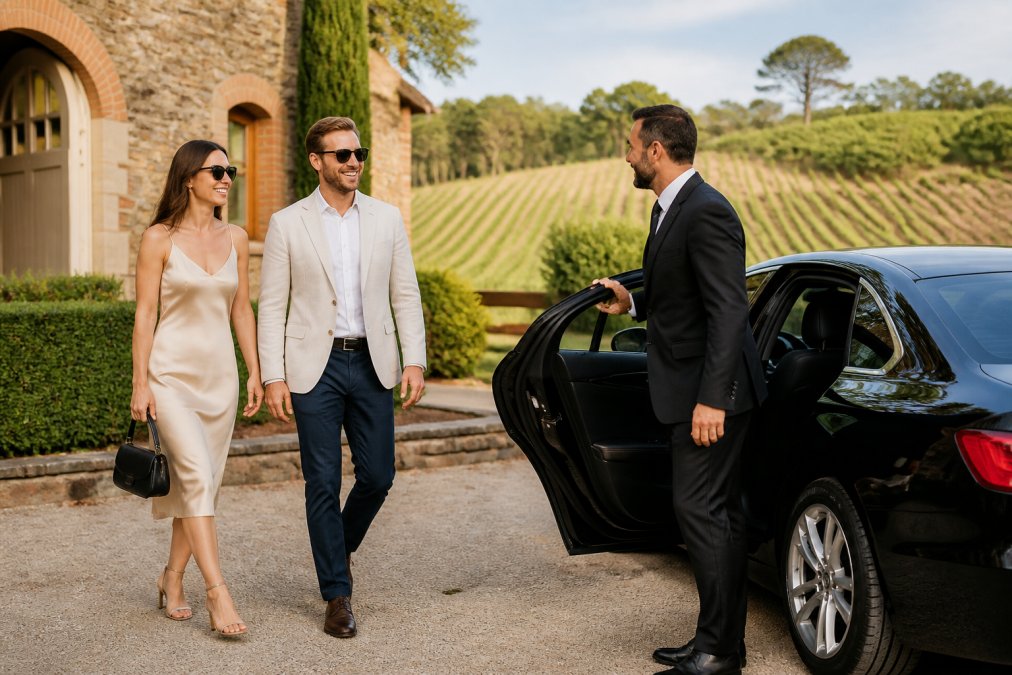
The Legal Baseline Every Organiser Must Know
In South Australia, a novice driver must hold a zero blood alcohol concentration, and for everyone else the general limit is under 0.05. Random breath testing operates throughout the hills, including on the rural roads between cellar doors. That single fact rules out the "we'll just share a few and rotate drivers" plan that appears in a lot of casual advice.
Your Realistic Options, Compared
- Designated driver: Free, but one person misses out on tasting. Workable only if that person genuinely does not drink and is comfortable on winding unsealed roads after dark.
- Rideshare: Coverage across the hills is patchy. You can usually get a pickup near the main townships, but a car may take 20 to 40 minutes to reach a remote cellar door, and surge pricing applies on weekends and public holidays. Do not build a multi-stop itinerary around it.
- Private transfer: A fixed price and a professional driver who knows the region. Most operators quote per vehicle rather than per person, so the cost per head falls sharply as your group grows from four to ten.
- Luxury chauffeur services for wine tours: Ideal for corporate groups and special occasions, and usually the only option that includes a named driver, a set itinerary and a guaranteed return time.
- Minibus or coaster: The standard choice for groups of ten or more. Some operators require a minimum spend or a minimum number of stops.
How to Choose Without Overpaying
A simple rule: divide the total vehicle cost by your headcount and compare it with the cost of one tasting fee per person. If the transport figure is in the same range, the convenience is usually worth it, because it removes the risk of a guest driving and removes the need to cut tastings short.
Booking Lead Times and Practical Traps
- Book private transfers and chauffeurs two to four weeks ahead for weekends, and earlier for long weekends, harvest events and December.
- Confirm whether the quote includes waiting time between stops. A driver who charges by the hour can turn a relaxed lunch into an expensive one.
- Ask whether the vehicle can access unsealed driveways. Some boutique cellar doors sit at the end of a gravel road.
- Give the driver your full itinerary, including approximate departure times, so they can plan the route rather than guess.
- Confirm the return time in writing. A late-night scramble for a ride in the hills ruins an otherwise excellent day.
A Note on Greener Transport
If sustainability matters to your group, a shared minibus or private transfer beats four separate cars on emissions per head. Ask operators whether they run hybrid or electric vehicles, and whether they consolidate pickups. A growing number of hills operators now advertise carbon-offset options, though the detail varies, so ask what is actually offset rather than accepting the label.
Step 5: Build a Food, Budget and Accessibility Plan Around Your Adelaide Hills Winery Tour
A food, budget and accessibility plan keeps everyone comfortable. Sort these three before the day arrives. This is the section most guides skip, so it is worth doing properly.
Food and Dining Pairings That Actually Work
Book a long lunch at a vineyard estate restaurant, or arrange a regional produce platter. Many cellar doors offer cheese and charcuterie boards that pair well with a tasting flight.
A few pairing principles help you order well:
- Match weight, not just colour. A crisp semillon or chardonnay handles soft cheese and oysters; a pinot noir handles duck, mushrooms and charcuterie; a shiraz handles aged cheddar and red meat.
- Eat before the third stop, not after. Tasting on an empty stomach is the fastest route to a ruined afternoon.
- Book the restaurant at the same time you book the tasting. Estate restaurants in the hills fill their lunch sittings weeks ahead for groups.
- Ask about set menus for groups. Many venues require them above eight people, and they are usually better value than ordering à la carte.
Dietary Requirements: Ask Early, Ask Specifically
Vegan, vegetarian, gluten-free, dairy-free, nut allergies and halal requests are all manageable at most hills venues, but only with notice. The practical rule is to collect every requirement when you confirm the headcount, then pass the full list to each venue at least 48 hours before the visit.
Budgeting the Full Day
| Cost Item | What to Plan For | Tip |
|---|---|---|
| Tasting fees | Per person, per stop | Often waived on purchase |
| Food | Lunch or platters | Book ahead for groups; set menus are common above eight |
| Transport | Private transfer or chauffeur | Split across the group; per-vehicle pricing favours larger parties |
| Wine purchases | Optional | Set a personal limit before the first pour |
| Contingency | One extra stop or a shared platter | Keep a small buffer rather than guessing exact costs |
Build a buffer rather than trying to predict every fee. Tasting fees vary by winery and are often waived when you buy wine, so the true cost depends on how much your group purchases.
Accessibility and Inclusive Planning
This is where most winery tour guides stop short, and it is the part that most often decides whether a day works for everyone in the group.
Ask each venue directly about:
- Step-free access from the car park to the cellar door, and from the cellar door to the tasting area and toilets.
- Accessible toilets, including whether they are unlocked and on the same level as the tasting room.
- Seating during tastings. Standing-only bars are common at smaller cellar doors, and a 90-minute tasting is a long time to stand.
- Path surfaces. Gravel and sloping vineyard paths are difficult for wheelchairs, walking frames and anyone unsteady on their feet.
- Hearing and lighting. Busy tasting rooms are loud, and a quieter corner or an outdoor table can make a tasting accessible to someone with hearing loss.
- Assistance dogs. Most venues welcome them, but confirm rather than assume.
A Framework for Mixing Big Names and Hidden Gems
Accessibility and crowd management often pull in the same direction. Large, well-known estates tend to have the best facilities, the most parking and the most reliable step-free access, but they also draw the biggest crowds. Small, family-run cellar doors tend to be quieter and more personal, but their facilities are more variable.
A workable pattern for a small group:
- Start with one larger estate that has full facilities and a restaurant, and book the earliest sitting.
- Move to one or two boutique cellar doors in the middle of the day, when the big estates are busiest.
- Finish at a smaller venue with a view or an outdoor tasting area, where your group can spread out.
Step 6: Plan for Sustainable Choices and Post-Tasting Logistics
Sustainable and eco-friendly wine tourism is growing, and small choices add up. Support wineries that use organic practices and refillable water stations.
A few simple habits help:
- Carpool or share a private transfer to cut emissions.
- Buy wine at the cellar door instead of shipping single bottles.
- Carry a refillable water bottle between stops.
- Eat local produce to support the region.
Common Mistakes to Avoid When Organising a Small Group Winery Tour
Overpacking the itinerary is the most common mistake when you learn how to organize a small group winery tour in Adelaide Hills. Three to four stops is plenty for a full day.
Other traps to dodge:
- Booking too late: Popular cellar doors fill up weeks ahead.
- Ignoring group limits: Some wineries cap group sizes.
- Skipping the driver plan: Never assume someone can drive.
- Forgetting dietary needs: Confirm food options in advance.
- Rushing tastings: Slow down and enjoy the wine.
Frequently Asked Questions
Do I need to book tastings in advance for a small group in the Adelaide Hills?
Yes, for groups of six or more, most cellar doors ask for advance notice so they can staff the tasting bench and prepare a private space. Book at least one to two weeks ahead, and longer for weekends, public holidays and vintage season. When you call, confirm your arrival time, group size, whether anyone has dietary or mobility needs, and whether tasting fees apply. If you are hiring a chauffeur, share the confirmed schedule with your driver so each stop is timed correctly.
What is the ideal duration for a small group winery tour?
Four to five hours works well for three cellar door visits with a lunch stop, allowing roughly 45 to 60 minutes at each winery plus travel between them. A full day of six to seven hours suits four or five stops, but energy and palate fatigue set in quickly. Build in a longer break after the second tasting. If you are planning a corporate retreat or hen's party, keep the schedule tight rather than cramming in extra venues, because late departures cascade through the whole itinerary.
How do I arrange private transport for a winery tour without a designated driver?
Book a chauffeur or group charter rather than relying on a nominated driver, who then misses the tasting experience entirely. A professional service handles the scenic route, parking at each vineyard estate and the drive home, and the vehicle can be sized to your group so nobody is squeezed. Confirm the booking includes waiting time at each stop, and ask whether the operator tracks your itinerary so pickups stay on schedule. This removes the biggest logistical risk of the day.
What should we know about tasting fees and tipping etiquette for group bookings?
Many Adelaide Hills cellar doors charge a tasting fee per person for groups, and some waive it when you buy wine or dine on site, so ask when you book. Confirm whether fees are payable per venue or bundled by your tour operator. On tipping, it is optional in Australia and not expected, though a small thank-you for exceptional service is appreciated. For group bookings, settle any shared costs before the day so nobody is chasing payments after the last stop.
Organising a small group winery tour takes planning, but the payoff is a smooth, memorable day. Get the transport right and everything else falls into place. DriveToArrive offers luxury chauffeur services for wine tours with named chauffeurs, fixed pricing and 24/7 support. Book now with DriveToArrive and enjoy a safe, comfortable day in the hills.
Vehicles, arrivals and behind-the-scenes from our chauffeur teams around Australia.