How to Plan a Bespoke Hunter Valley Wine Tour in 2026
Learn how to plan a bespoke Hunter Valley wine tour in 2026, from cellar door bookings to private luxury transport and a perfectly timed itinerary. Book.

Table of Contents
- Step 1: Define Your Group, Budget and Wine Style
- Step 2: Choose the Right Hunter Valley Wine Region Sub-Area
- Step 3: Meet Hunter Valley Cellar Door Booking Requirements
- Step 4: How to Structure a Wine Tasting Itinerary That Flows
- Step 5: Arrange Private Luxury Wine Tour Transport
- Step 6: Food, Dining and Regional Produce Pairings
- Step 7: Plan the Details Most Guides Miss
- Frequently Asked Questions
Last Updated: September 19, 2026
Step 1: Define Your Group, Budget and Wine Style
A bespoke hunter valley wine tour starts with three decisions: who is coming, what you want to spend, and which styles of wine you actually enjoy. Get those clear first and every later choice gets easier, vehicle, route, cellar door shortlist and lunch booking all flow from this brief.
Most people book transport before they know their group size. That is backwards. Group size decides your vehicle, your route and how many cellar doors you can realistically visit in a day.
Build a one-page group brief
Write this down before you call anyone. It takes ten minutes and saves hours.
- Group size and composition: 2 to 4 people suits a sedan. Five to 11 needs a people mover or minibus. Twelve or more needs a coach or a split convoy of two vehicles. Note how many are couples, how many are non-drinkers, and whether anyone is celebrating an occasion, cellar doors handle birthdays and proposals differently.
- Budget line items: tasting fees, transport, lunch, and any bottles you buy. Set a per-head figure before you call anyone. A common pattern is to split the budget roughly into thirds: transport, food, and tastings plus wine purchases.
- Wine style: red-heavy, white-heavy, sparkling, or a mix. This drives which sub-area you target and the order of your stops.
- Accessibility and dietary needs: ask every guest directly. Mobility, step-free access, accessible bathrooms, vegan, gluten-free, halal, allergies. One guest with a mobility aid or a strict dietary requirement changes your venue shortlist and your lunch booking.
Budgeting realistically
Tasting fees vary by cellar door and are often waived when you buy wine, but you cannot assume that. Confirm the current fee when you book rather than assuming. Build a buffer for the bottles you will inevitably buy, most groups underestimate this line by a wide margin.
For transport, fixed-price private hire is easier to budget than metered or surge-priced alternatives because the number is known before the day.
Match the group to the day length
Group size and stamina should decide whether you plan a half-day or a full-day tour. A group of two or three can comfortably manage four cellar doors and a long lunch. A group of ten will move slower, so three cellar doors plus lunch is a more realistic ceiling. If the group includes non-drinkers or older guests, build in a longer midday break rather than trying to squeeze in one more stop.
Step 2: Choose the Right Hunter Valley Wine Region Sub-Area
The Hunter Valley is not one block of vines. It splits into pockets with different soils, elevations and driving distances, and picking the wrong pocket wastes your day in the car.
- Pokolbin: the commercial heart. Highest density of cellar doors, easiest for first-timers.
- Broke: quieter, family-run, better for a slower pace.
- Lovedale: smaller, more boutique vineyard estate feel.
- Mount View and Broke Fordwich: hidden gems with fewer crowds.
Step 3: Meet Hunter Valley Cellar Door Booking Requirements
Hunter Valley cellar door booking requirements are simple but strict: most cellar doors now expect a booked tasting flight, especially for groups of six or more. Walk-ins still work at some venues, but you cannot rely on it.
- Book direct with each cellar door where possible
- Confirm group size, arrival time and tasting fee at the time of booking
- Ask whether the venue accepts split bills or card surcharges
- Check cancellation terms before you commit
Step 4: How to Structure a Wine Tasting Itinerary That Flows
A hunter valley wine tour itinerary should move from lighter wines to heavier ones, and from fewer bookings to more, so your palate and your energy hold up. Three to four cellar doors in a day is the realistic ceiling for most groups.
Here is a structure that works:
- 10:00am: first cellar door. Whites and sparkling while you are fresh.
- 11:30am: second stop. Semillon and lighter reds.
- 1:00pm: long lunch with a wine pairing.
- 3:00pm: final stop. Shiraz and heavier reds.
- 4:30pm: scenic route back, or a regional produce stop.
Step 5: Arrange Private Luxury Wine Tour Transport
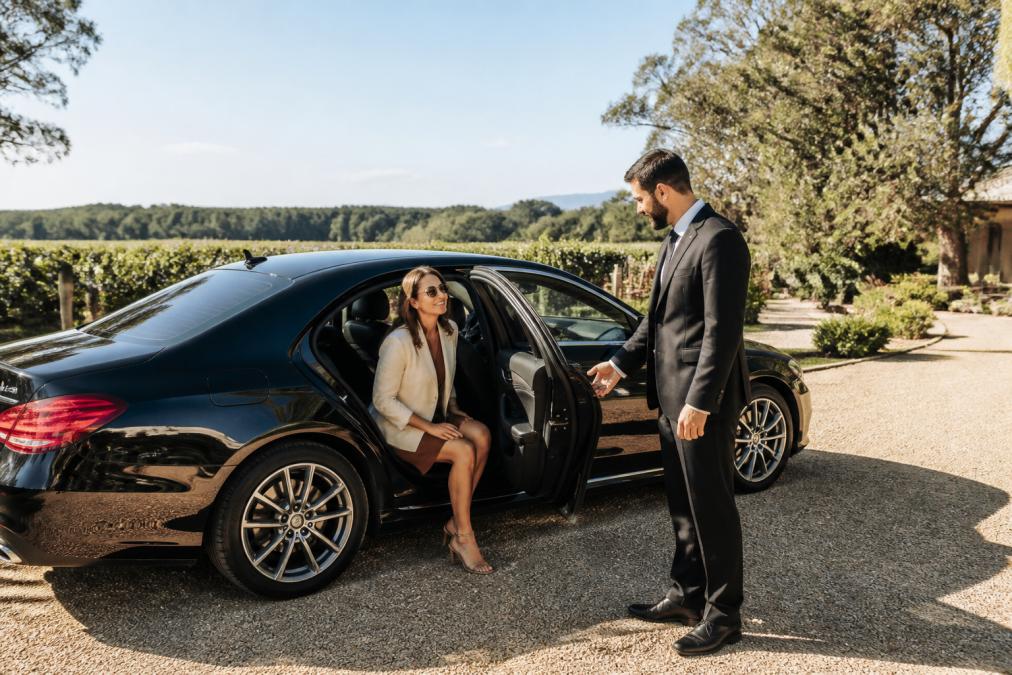
Private luxury wine tour transport removes the designated driver problem entirely and lets every guest taste without counting drinks. It also solves the logistics that break DIY plans: parking, timing and the drive between sub-areas.
Step 6: Food, Dining and Regional Produce Pairings
Food is not an afterthought on a wine tour. A proper lunch slows the day down, soaks up the alcohol and gives your group a natural break between tasting flights. It also determines whether your afternoon stops are enjoyable or a slog.
Pair the meal to the wine
Match the meal to the wine rather than the other way around:
- Semillon with fresh seafood and oysters
- Shiraz with slow-cooked red meat
- Sparkling with soft cheese and charcuterie
- Regional produce platters for a lighter, flexible option
Book lunch when you book your cellar doors
Popular venues fill weeks ahead on weekends. Book lunch at the same time you book your cellar doors, not after. Tell them your group size and any dietary needs when you book, not on the day.
Accessibility at the table
Confirm step-free access to the dining room, accessible bathrooms, and whether the table can be reached without stairs or gravel paths. Ask directly. Not every venue is set up for wheelchairs or limited mobility, and the ones that are will tell you quickly.
Post-tasting logistics
Plan the end of the day before it starts. Nobody wants to solve dinner, accommodation and the next morning's transport at 6pm after a full day of tasting.
- Dinner: book it in advance, especially on weekends, and choose somewhere close to where you are staying.
- Accommodation proximity: staying within a short drive of your last cellar door shortens the trip home and reduces risk.
- Wine shipping: if you have bought bottles across the day, ask each cellar door about shipping rather than carrying them in the vehicle. Many venues can consolidate or ship directly, which also solves the storage problem at home.
- Next morning: if you have a second day planned, book the transport before the first day starts. Groups that leave it until the morning after routinely lose an hour.
| Planning Detail | Why It Matters | When to Sort It |
|---|---|---|
| Accessibility needs | Not all venues are step-free | Before booking |
| Dietary requirements | Kitchens need notice for proper dishes | At lunch booking |
| Accommodation proximity | Shorter, safer trip home | With transport booking |
| Wine shipping | Avoids carrying bottles and storage issues | During each tasting |
| Post-tasting dinner | Avoids last-minute scramble | One week ahead |
Step 7: Plan the Details Most Guides Miss
The details below separate a good day from a frustrating one, and most planning guides skip them completely.
| Planning Detail | Why It Matters | When to Sort It |
|---|---|---|
| Accessibility needs | Not all venues are step-free | Before booking |
| Accommodation proximity | Shorter, safer trip home | With transport booking |
| Sustainable venue choices | Lower impact, better story | During venue selection |
| Post-tasting dinner | Avoids last-minute scramble | One week ahead |
Frequently Asked Questions
How far in advance should I book a private wine tour in the Hunter Valley?
For weekend visits between March and May or September and November, book three to four weeks ahead. Cellar doors with limited seating, such as boutique vineyards offering seated tasting flights, often fill six weeks out. If your group exceeds eight people, allow even more lead time. Transport providers also fill quickly on Saturdays, so lock in both cellar door appointments and your private luxury wine tour transport before confirming your date with guests.
What should be included in a bespoke wine tour itinerary?
A well-structured wine tasting itinerary includes three to four cellar door visits with 60 to 90 minutes at each, a lunch stop of at least 90 minutes, and travel buffers of 20 to 30 minutes between venues. Build in a mix of boutique vineyards and one larger vineyard estate, and finish with a scenic route or a final stop for regional produce. Avoid scheduling more than four tastings; palate fatigue sets in, and the experience becomes rushed.
Are there specific cellar doors in the Hunter Valley that require private appointments?
Yes. Many boutique vineyards operate by appointment only, particularly for groups of six or more. Some offer private seated tastings with the winemaker, which must be booked weeks ahead. Larger estate cellar doors often accept walk-ins but still recommend bookings on weekends. Always confirm the cellar door booking requirements directly, including tasting fees, group size limits, and whether they accept minibuses or larger vehicles.
How do I choose the right transport for a Hunter Valley wine tour?
Look for a provider with a designated driver, a vehicle suited to your group size, and fixed pricing with no surge charges. Private luxury wine tour transport should include a professional chauffeur who knows the wine region, can wait between stops, and handles multiple cellar door pickups without rushing. Confirm the booking covers all transfers, waiting time, and return to your accommodation. Ask about flight tracking if you are arriving by air, and check the provider is fully licensed and insured.
Planning a bespoke wine tour means juggling group size, venue bookings, timing and transport, and the transport piece is where most plans quietly fall apart. DriveToArrive covers that gap with 24/7 availability, fixed prices with no surge, and a named chauffeur recorded against every trip. Book your winery tour transport with DriveToArrive and let your group focus on the wine, not the drive.
Vehicles, arrivals and behind-the-scenes from our chauffeur teams around Australia.